
The Tombala Objects and Shared Memory
The Museum of InnocenceThis flow traces how household prizes and game objects make the Keskin family’s ordinary rituals available for later remembrance.
increasing Bearing strength in each event
 decreasing
Bearing strength in each eventdecreasingA Child’s Game Reappears
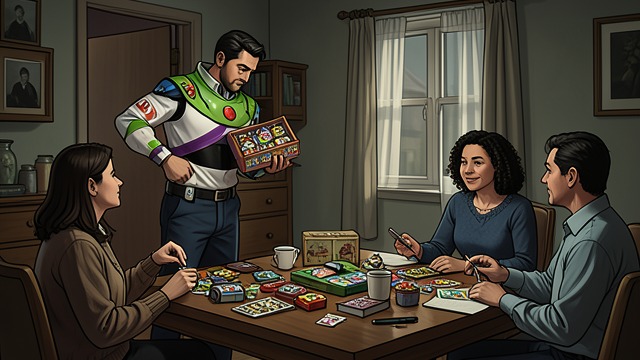
A Child’s Game Reappears
Kemal carries gifts across households
Kemal brings tombala prizes from his mother’s New Year gathering to the Keskin home. The gesture connects his childhood family ritual with the new family circle he hopes to enter.
A modest welcome
The family combines its prizes with his, making the game a shared activity rather than a formal visit. Füsun’s attention makes the evening especially meaningful to him.
Small Prizes, Shared Joy
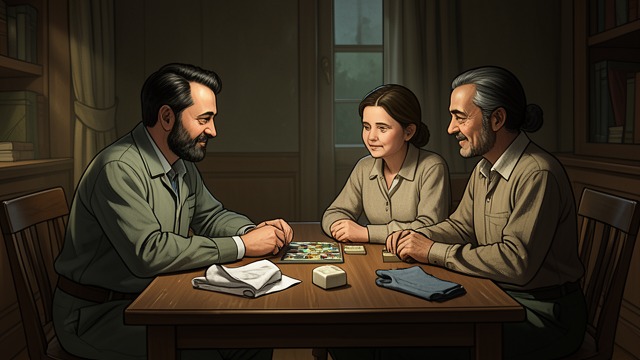
Small Prizes, Shared Joy
Household things become rewards
The prizes include handkerchiefs, socks, soap, and other inexpensive items. Their value comes from winning the game and sharing the evening, not from their cost.
A family’s way of belonging
Kemal observes that the Keskins treat possessions as belonging to the household. The contrast with his own assumptions deepens his awareness of class and family life.
The Childhood Handkerchief
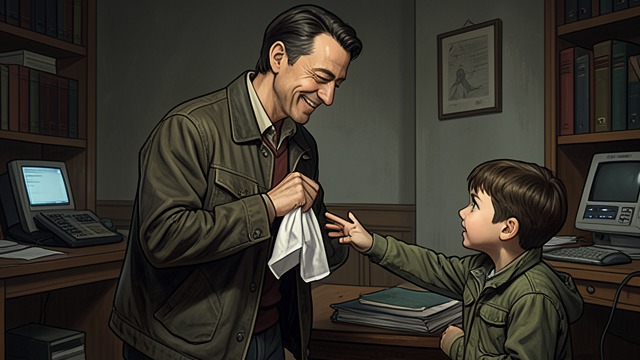
The Childhood Handkerchief
A prize with a history
Kemal wins a handkerchief that Nesibe identifies as one of Füsun’s childhood belongings. He responds with a joke, while secretly valuing it as a direct link to her past.
A child notices the theft
Ali later sees Kemal place it in his pocket and asks to have it back. The encounter reveals that his collecting has become visible to the next generation.
A Glass from the Past
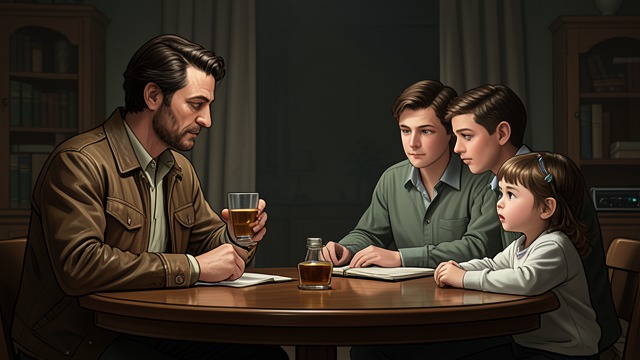
A Glass from the Past
Kemal gives a remembered object
Kemal contributes an antique glass once used on the day he and Füsun last made love before their separation. It enters the family game among ordinary household prizes.
Meaning goes unrecognized
Tarık wins the glass and uses it without recognizing its significance. Kemal must carry the memory privately, even while sharing the table.
A Museum of the Ordinary
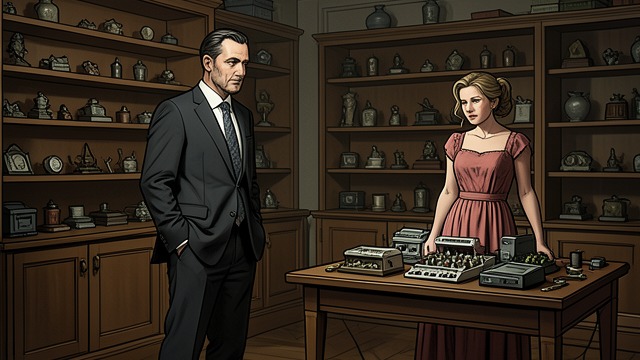
A Museum of the Ordinary
Objects preserve repetition
The tombala set, tickets, handkerchiefs, and calendar pages become part of Kemal’s collection. They preserve many evenings that would otherwise be forgotten.
Memory needs a community
The objects matter because a family gathered around them. In the museum, Kemal tries to let future visitors feel the shared warmth of those nights.
December 31, 1976
New Year’s Eve, 1977–1979
New Year’s Eve, 1982
New Year’s Eve, 1980
After the family rituals end
